
Kids Adventure Days


— When School Is Out, Adventure Is In! —


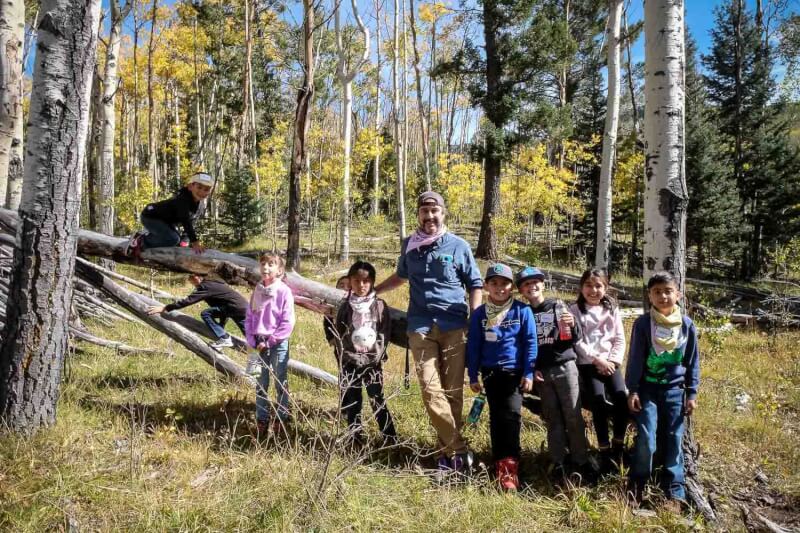
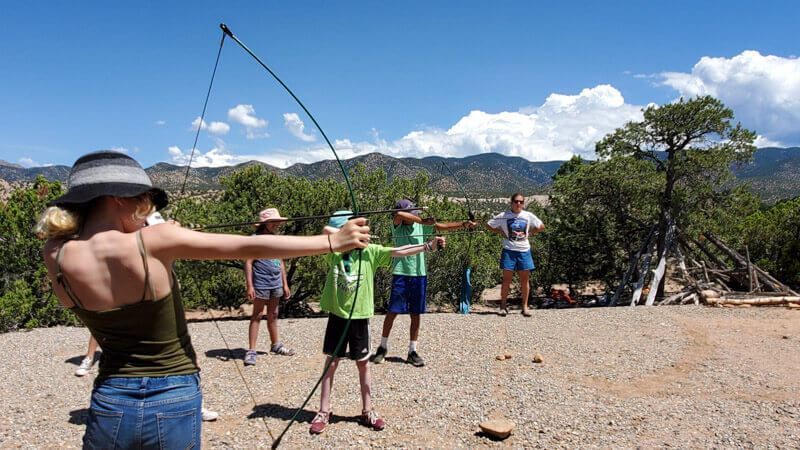
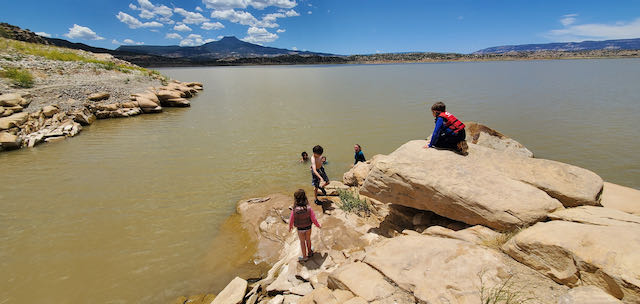
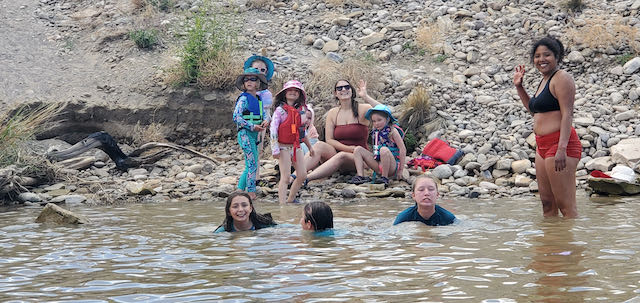
After days spent inside the classroom, kids are ready to stretch their legs, breathe fresh air, and let their imaginations run wild. Our No-School Adventure Days give children the chance to trade desks and screens for trails, creeks, and forests—where learning happens through play, movement, and discovery.

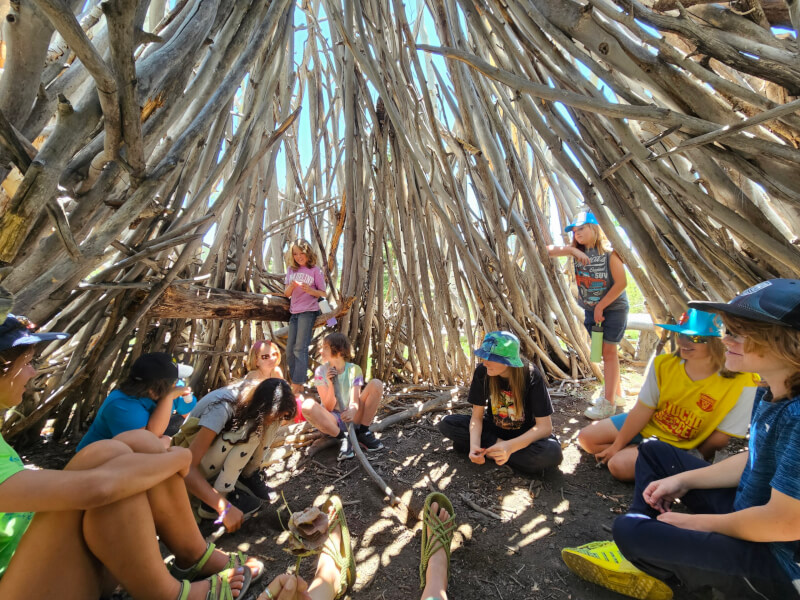
Each day is packed with hands-on adventures like shelter-building, animal tracking, crafting, hiking, and storytelling. These activities spark curiosity, build confidence, and inspire a lifelong connection to the natural world. Our camps provide a safe, fun, and energizing way for kids to recharge in nature during their time off from school.


Open to: Ages 5-12

Drop-off & Pick-up: Patrick Smith Park

Hours: 8:30 am – 3:30 pm 

Spring 2026 Dates:

  • Friday, May 1, 2026
  • Monday, May 4, 2026

Cost: See below: “Sliding Scale Pricing”

Challenge Level: (Age-Appropriate)


NEW: Sliding Scale Pricing

We’re committed to making Mountain Kids! programs accessible to all families. That’s why we now offer Sliding Scale Pricing—no scholarship application required. When you register, choose the tuition level that works best for your family. If additional assistance is needed, please don’t hesitate to contact us. 

Kids Adventure Days:

  • Standard Rate: $105 + tax
  • Supported Rate: $90 + tax
  • Community Rate: $75 + tax

Space is limited, so don’t wait. Register Today!


Spring Break Adventure Camp


— Spring into Adventure! —


Join us for Spring Break Adventure Camp!

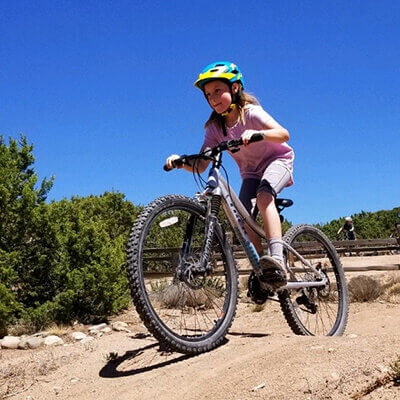
Celebrate the season of growth, exploration, and fresh air with Mountain Kids! During Spring Break Adventure Camp, kids will spend their days discovering, playing, and adventuring outdoors. Each day features hands-on exploration, nature-inspired art, games, hiking adventures, and skill-building activities—designed to spark curiosity and joy in the changing spring landscape.

Rain or shine, we’ll explore a different outdoor location in the Santa Fe area each day, traveling together in our Adventure Van and letting the natural world guide our adventures.

Our programs build confidence, encourage creativity, and foster a meaningful connection to nature. Designed for children ages 5–12, Spring Break Adventure Camp offers a safe, fun, and energizing way for kids to unplug, recharge, and welcome spring during their time off from school.


Open to: Ages 5-12 (Grades K-6)

Drop-off & Pick-up: Patrick Smith Park

Hours: 8:30 am – 3:30 pm daily

Dates: Monday, March 30 – Friday, April 3rd

Cost: Sliding Scale Choose the tuition level that works for your family.

Challenge Level: (Age-Appropriate)


NEW: Sliding Scale Pricing

We’re committed to making Mountain Kids! programs accessible to all families. That’s why we now offer Sliding Scale Pricing—no scholarship application required. When you register, choose the tuition level that works best for your family. If additional assistance is needed, please don’t hesitate to contact us. 

Spring Break Adventure Camp:

  • Standard Rate: $525 + tax
  • Supported Rate: $450 + tax
  • Community Rate: $375 + tax

Space is limited. Register Today!


After-School Adventures

Join Mountain Kids! for an adventurous, nature-filled, skill-building, and wildly fun after-school program this fall.

We are now offering school pick-up and longer hours to support working parents and get more kids out to play!

Mountain Kids will explore a diversity of trails around Santa Fe. Kids will learn and play through engaging games, activities and hiking adventures. Themes include ecology, nature awareness, survival skills, and seasonal cycles.

Spending time in nature is beneficial to children’s social, emotional, and physical health. Children develop greater confidence, teamwork, and build tolerance for adversity by spending time outside. Kids have fun, get dirty, and (best for parents) tired!


Winter/Spring 2026

Open to: Ages 5-12 (K-6th Grade)

Parent Pick-up: Patrick Smith Park or Santa Fe Canyon Preserve

Program Days & Hours:

  • Tuesdays & Thursdays: ~3:00 – 6:00 pm
  • Fridays: ~1:00 – 6:00 pm

Dates:

  • Winter Session (8 weeks): February 3 – March 27
  • Spring Session: (7 weeks): April 7 – May 22

Cost: 

  • Sliding Scale Tuition: We remain committed to accessibility. Tuition for both sessions will include a sliding-scale option.

Challenge Level:  (Age-Appropriate)


School Pick-Up Requirements & Locations

  • 2-child minimum per school for pick-up:
    • If fewer than two children from your child’s school are registered, families are welcome to drop off at the park. 

      • Parent Drop-off:
        • Tuesday & Thursday, 4:00 pm; Santa Fe Canyon Preserve
        • Friday, 1:30 pm; Patrick Smith Park.
  • 6-child minimum per program day:
    • We need at least six participants to run each day of programming.
  • 14-day refund window:
    • We encourage families to try the program for two weeks, and welcome cancellations and refunds within that time frame.
    • No refunds will be issued after 14 days from the start of each session.

If you are interested in our After-School Adventures program or have questions, please get in touch with Program Director, Gwen Lyons, at gwen@mountainkidsnm.org.

Repetition is Good!

Why Repetition Matters in Nature-Based Learning

At Mountain Kids! camp, you might notice that certain themes, stories, and activities reappear from year to year—like building survival shelters, exploring insect habitats, or learning how to purify water. This repetition isn’t just tradition—it’s intentional, and it plays a powerful role in your child’s development.

Here’s why children thrive when themes and experiences repeat in outdoor education:

1. Familiarity Builds Comfort and Confidence

Returning to a familiar story or activity—like hiking a beloved trail or learning how to whittle—gives children a sense of security. In nature, where so much can change with the weather or season, predictable rhythms help children feel grounded and safe.

2. Mastery Through Repetition

Each time a child revisits an activity, they deepen their understanding and build new skills. Whether it’s identifying birdsong or safely using hand tools, repeated practice allows campers to grow more capable and confident each year.

3. Deepening Learning Over Time

Nature is a rich teacher, and repetition gives children the chance to notice more details with each encounter. A frog pond visited last year becomes a deeper source of curiosity this year, revealing new layers of learning as their brains and interests develop.

4. Emotional Connection and Joy

Familiar activities carry emotional memories. Singing the same campfire song or walking the same morning trail evokes joy, creates traditions, and builds a lasting bond with the natural world.

5. Pattern Recognition and Seasonal Awareness

Repetition in nature—like watching leaves change color each fall or tracking animal tracks in the snow—helps children recognize natural cycles. These patterns foster ecological awareness and support early scientific thinking.

6. Lifelong Learning and Transferable Skills

As children repeat and refine their outdoor experiences, they begin to apply what they’ve learned to new situations—understanding how weather affects different ecosystems or how teamwork improves a group project. This generalization is key to lifelong learning.

In Nature, Every “Repeat” Is a New Discovery

Even when we revisit the same activities, nature ensures that no two experiences are ever exactly alike. With each return, children notice something new, grow a little more, and deepen their connection to the world around them. That’s the magic of learning through repetition—especially when it’s rooted in the rhythms of the natural world.

Raising Resilient, Confident, Aware, Nature-Loving Kids

As a parent of young adults (my kids are now 18 and 20), I look back on the years my kids spent with Mountain Kids! with gratitude for who they have become as a result of their time in nature. I know that the qualities of resilience, confidence, problem solving, awareness, and a deep love of the natural world stem from the summers they spent in the mountains.

At Mountain Kids! campers build resilience by climbing a mountain peak or camping for the first time. They build confidence by learning skills such as building a campfire or a survival shelter and sleeping in it. They develop problem solving skills by working together, resolving conflict, and helping each other through compassionate, self-aware actions. At Mountain Kids! we learn that we need to function as a team to thrive.

Our campers develop a deep love of the natural world by learning about it; tracking animals, gaining plant knowledge, and spending mindful time in nature which translates to greater awareness in all areas of life. Importantly, kids also have fun! They are developing a love of the natural world, a relationship that lasts a lifetime.

Because of who my kids have become, I am even more passionate than ever for all kids to spend time in nature. I know that these experiences have made them who they are today; confident, resilient, aware, compassionate, lovers of nature. These values contribute to their sense of trust and adventure in the world, and their willingness to try new things. 

My son spent last semester in Chile, living in a new culture with a family, learning a new language, climbing mountains, and navigating it all with confidence and grace. He is now bilingual and has gained even more confidence by thriving in a new environment.

My daughter is a high school senior, and despite the challenges that adolescence brings, she remains keenly aware of her surroundings, resilient in the face of disappointment, and one of the best problem solvers I know. 

I can rest at night knowing that nature did its job. Their nature-rich childhoods have given them the tools to thrive as young adults in an ever-changing and challenging world. 

My wish is for your kids to have the same opportunity and the gift of time in nature. 

Together, let’s build resilient, confident, compassionate, problem solving, aware and nature-loving kids. 

Foraging in the Forest

Summer Camp Week 2: June 3-7, 2024

Foraging in the forest is an exciting week learning about plants as allies, tools, medicine, food, and fun!

On Monday, we explored plants as shelter by using down, dead and dry aspen to build the base of our shelters, and learning about Old Man’s Beard, Pine, and Grasses to waterproof our shelters. Trees and plants also served as great hiding spots for a classic game of Eagle Eye. Our Hummingbirds (youngest campers) got very excited about making their personal plant page; building their curiosity about each new plant friend.

Tuesday was tool day, exploring the uses of Yucca to make cordage, soap and clothing. We also talked about the uses of plants and made a salve to illustrate the many uses of plants. A hike to the Hyde Park waterfall was a wonderful way to cool off on a hot day in the mountains. Our oldest campers (Eagles) gained experience with safe knife-use learning how to whittle to make a spear, or a pair of chopsticks.

On Wednesday and Thursday we explored plants as food and medicine on the Big Tesuque trail; collecting edible plants to make nourishing and yummy teas. Of course, every conversation about edible plants includes a caveat that campers are never to eat any plant without permission from an experienced and knowledgable adult. We learned about edible dandelions and talked about juniper, mullein and some plants to avoid (Monk’s Hood).

Friday at the Norski trail was an opportunity to learn to identify trees, tell stories, and press some of the plentiful wildflowers in the forest. Team building with games like Otter in the Water and shelter building gave everyone an opportunity to consider how to work together toward a common goal; an important skill to bring back into our daily lives.

What a wonderful week of plants and playing in the mud (Eagles). Thanks to our plant expert, Bek, for designing the curriculum for a fun and educational week of foraging in the forest.

Awesome Animals of NM!

Summer Camp Week 1: May 28-31, 2024

Summer Camp 2024 launched by exploring the mountains of Santa Fe and the awesome animals that live here. While exploring the Santa Fe Canyon Preserve, we learned about awareness of being in nature, listening for sounds all around and looking for animal signs. We saw many signs of the beaver that used to inhabit this area, and learned about the characteristics of beavers that enable them to live in a watery, cold environment, while chewing trees to make their homes and fill their bellies.

We played many animal themed games including Animal Charades, Pig, Tail Tag, and Park Ranger to think more about the characteristics of animals that help them thrive in the wild.

A visit to the Wildlife Center brought us up close and personal with real animals of New Mexico including owls, raptors, raccoons and snakes.

Of course, a week of Mountain Kids! wouldn’t be complete without imaginative play including boat-making, bridge-making and fort building. It was a wonderful week to kick off summer 2024, and we had a great time imagining the life of an animal and becoming one with the wild!

Historic Winter Hike: Tsankawi

Tsankawi is an amazing winter hike, only 40 minutes from Santa Fe.  In fact, Tsankawi is great any time of year, but can be hot without cloud cover during summer months.

Tsankawi is a part of Bandelier Nationl Monument, but without handrails, concrete ramps and steps. At Tsankawi you can pretend you are explorer discovering this place for the first time, with waist deep grooves in the paths and a myriad of caves to explore.

The rock here was created when the Valles Caldera blew it’s top, and ash and lava flowed down to form what is now called volcanic tuff.  It is a soft rock that the pueblo people dug into to make the cavates. Cavates are human made caves that were a part of the pueblo peoples settlement.  There are many intriguing cavates to be explored on this hike.

The 1.6 mile loop trail involves three ladders, so be prepared to navigate these. The first one is short (and can actually be avoided if you prefer), while the second can be missed entirely by taking a slot trail, and the third, at the far end of the mesa, is the longest, and unavoidable. 

I like to do the trail “backwards” with younger kids so they can climb up the long ladder instead of down which seems easier for them.  To do it this way, stay right and walk along the edge when the arrow points up to the left. You will also avoid the second ladder this way. There is a drop-off on one side, but the path is wide enough to avoid heart-palpitations, for the most part.

Once you reach the caves, be sure to stop and sit in one together. (Be careful to tread lightly, as it is easy to kick up dust in there, which makes sitting inside no fun.) In the cave, have a snack, tell a story, break out your long lost flute or recorder, or just imagine what life would have been like for the kids who lived here.  Ask your kids what it would be like to live here. What would they do for fun? Would they work in the fields? These are fun ideas to ponder with your kids and can provoke conversations for days and weeks to come.  Next time you take away their screen time, they can pretend they live in a cave and need to find their own fun. Just imagine…

Getting There

Take 285 North to Pojoaque. Take Hwy 502 West toward Los Alamos. Take Hwy 4 toward White Rock. The trailhead is on the left just before the first stop light you see.  Park here and grab a ticket at the kiosk to put in your car which is your entrance fee ($25/car). Pick up a map for $1 at the entrance to learn more while you hike.