
No-School Adventure Days


— When School Is Out, Adventure Is In! —


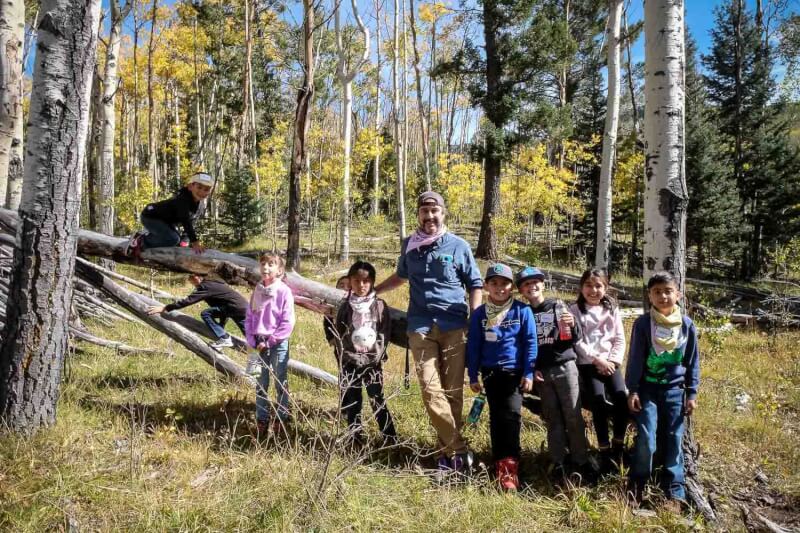
After days spent inside the classroom, kids are ready to stretch their legs, breathe fresh air, and let their imaginations run wild. Our No-School Adventure Days give children the chance to trade desks and screens for trails, creeks, and forests—where learning happens through play, movement, and discovery.

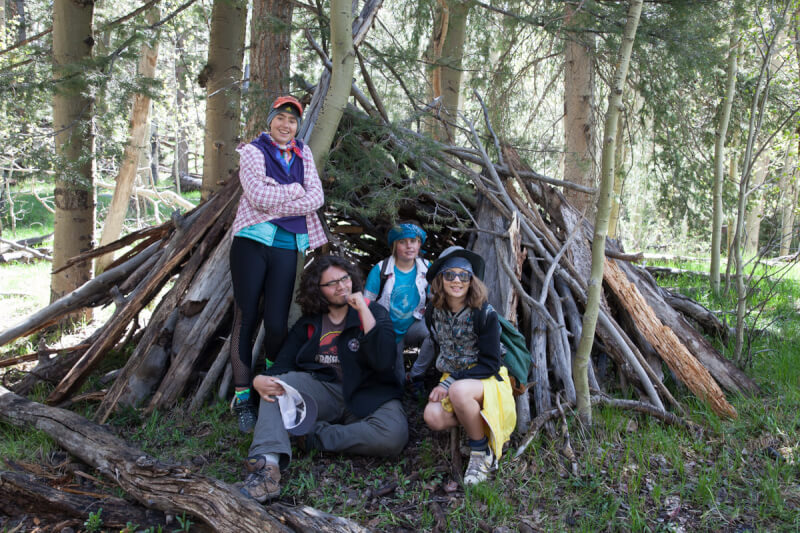
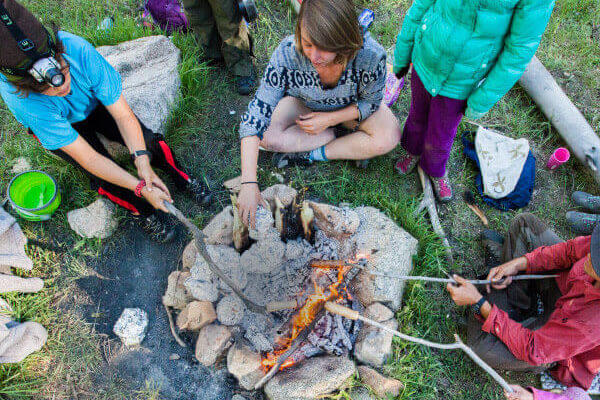
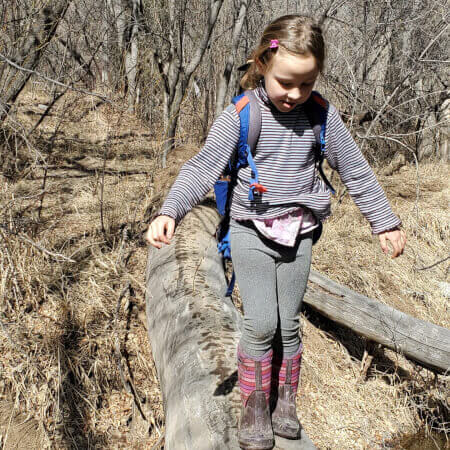
Each day is packed with hands-on adventures like shelter-building, animal tracking, crafting, hiking, and storytelling. These activities spark curiosity, build confidence, and inspire a lifelong connection to the natural world. Our camps provide a safe, fun, and energizing way for kids to recharge in nature during their time off from school.


Open to: Ages 5-12

Drop-off & Pick-up: Patrick Smith Park

Hours: 8:30 am – 3:30 pm 

Spring 2026 Dates:

  • Friday, May 1, 2026
  • Monday, May 4, 2026

Cost: See below: “Sliding Scale Pricing”

Challenge Level: (Age-Appropriate)


NEW: Sliding Scale Pricing

We’re committed to making Mountain Kids! programs accessible to all families. That’s why we now offer Sliding Scale Pricing—no scholarship application required. When you register, choose the tuition level that works best for your family. If additional assistance is needed, please don’t hesitate to contact us. 

No-School Adventure Days:

  • Option 1: $75 + tax
  • Option 2: $90 + tax
  • Option 3: $105 + tax

Space is limited, so don’t wait. Register Today!


After-School Adventures

Join Mountain Kids! for an adventurous, nature-filled, skill-building, and wildly fun after-school program this fall.

We are now offering school pick-up and longer hours to support working parents and get more kids out to play!

Mountain Kids will explore a diversity of trails around Santa Fe. Kids will learn and play through engaging games, activities and hiking adventures. Themes include ecology, nature awareness, survival skills, and seasonal cycles.

Spending time in nature is beneficial to children’s social, emotional, and physical health. Children develop greater confidence, teamwork, and build tolerance for adversity by spending time outside. Kids have fun, get dirty, and (best for parents) tired!


Winter/Spring 2026

Open to: Ages 5-12 (K-6th Grade)

Parent Pick-up: Patrick Smith Park or Santa Fe Canyon Preserve

Program Days & Hours:

  • Tuesdays & Thursdays: ~3:00 – 6:00 pm
  • Fridays: ~1:00 – 6:00 pm

Dates:

  • Winter Session (8 weeks): February 3 – March 27
  • Spring Session: (7 weeks): April 7 – May 22

Cost: 

  • Sliding Scale Tuition: We remain committed to accessibility. Tuition for both sessions will include a sliding-scale option.

Challenge Level:  (Age-Appropriate)


School Pick-Up Requirements & Locations

  • 2-child minimum per school for pick-up:
    • If fewer than two children from your child’s school are registered, families are welcome to drop off at the park. 

      • Parent Drop-off:
        • Tuesday & Thursday, 4:00 pm; Santa Fe Canyon Preserve
        • Friday, 1:30 pm; Patrick Smith Park.
  • 6-child minimum per program day:
    • We need at least six participants to run each day of programming.
  • 14-day refund window:
    • We encourage families to try the program for two weeks, and welcome cancellations and refunds within that time frame.
    • No refunds will be issued after 14 days from the start of each session.

Space is limited, register your child today!


Have questions? Don’t hesitate to get in touch with Program Director, Gwen Lyons, at gwen@mountainkidsnm.org.

Awesome Animals of NM!

Summer Camp Week 1: May 28-31, 2024

Summer Camp 2024 launched by exploring the mountains of Santa Fe and the awesome animals that live here. While exploring the Santa Fe Canyon Preserve, we learned about awareness of being in nature, listening for sounds all around and looking for animal signs. We saw many signs of the beaver that used to inhabit this area, and learned about the characteristics of beavers that enable them to live in a watery, cold environment, while chewing trees to make their homes and fill their bellies.

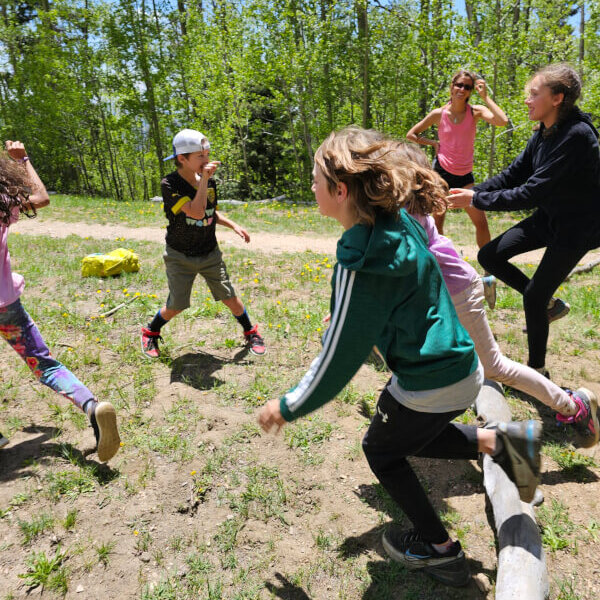
We played many animal themed games including Animal Charades, Pig, Tail Tag, and Park Ranger to think more about the characteristics of animals that help them thrive in the wild.

A visit to the Wildlife Center brought us up close and personal with real animals of New Mexico including owls, raptors, raccoons and snakes.

Of course, a week of Mountain Kids! wouldn’t be complete without imaginative play including boat-making, bridge-making and fort building. It was a wonderful week to kick off summer 2024, and we had a great time imagining the life of an animal and becoming one with the wild!

Willow: Early Buds for Bees, and Sustenance for Many

By Carmen Harris

As we begin our warm-cold dance & windy journey toward spring you will inevitably notice periods of time when the weather is so fine and fair that our bees can be seen flying about in search of sustenance. I’ve already noticed them on our warm days sipping on the resin of wood that I’ve been cutting while I work outside, doing their best to seek whatever they can during this ‘fallow’ time in the plant world before buds break open in Spring. What are the early foods that our bees can eat to sustain themselves at this time of the year? 

Willow, one our earliest budding shrubs, will open their catkins or ‘pussy’ buds at the end of February to early March, displaying delicious pollen for our bees to sup on. Beekeepers will often place their hives of bees near stands of willow for early foraging and for the health and wellness of their hives.

Let’s take a wee look at the willow who so kindly buds early for our bees. The term “pussy willow” refers to several species of willows that get furry gray catkins. Generally, the first spring “pussy” buds, often have a lovely silken, soft grey fur about them – like a cat or a rabbit. Later, the fur disappears and is replaced by either male or female flowers, depending on which type of plant you have. Pussy willows are dioecious, meaning there are both male and female trees. Although only the male flowers produce pollen, both sexes produce nectar.

In New Mexico we have a common willow known locally as ‘Coyote willow’ or ‘Sandbar Willow’ (Salix exigua). You have most likely seen, played with and hidden coyote willow along ditches, riverbanks, and historically, underneath cottonwood trees around Santa Fe and other parts of New Mexico.

Children at Mountain Kids! will have interacted with coyote willow at the Upper Canyon Road Preserve and along the Santa Fe river. 

Coyote willow is a special habitat for many critters, one being the Willow Fly Catcher. It is also browsed avidly by deer throughout the winter, and to some extent by sheep, goat, rabbit and cattle, in summer and early fall. Beaver also eats the trunks of willow, along with those of cottonwood, gnawing the inner bark or cambium as food, and placing the sticks as parts of dams or lodges. 

Coyote willow roots freely from cuttings when put straight in water or into damp soil. I like to carefully and considerately cut a few new shoots with tight buds on them in early February, place them in a vase or jar and observe the buds opening in my warm home earlier than they would outside. Keep your eyes out for these special, soft buds, and for the bees that rely on them!

Historic Winter Hike: Tsankawi

Tsankawi is an amazing winter hike, only 40 minutes from Santa Fe.  In fact, Tsankawi is great any time of year, but can be hot without cloud cover during summer months.

Tsankawi is a part of Bandelier Nationl Monument, but without handrails, concrete ramps and steps. At Tsankawi you can pretend you are explorer discovering this place for the first time, with waist deep grooves in the paths and a myriad of caves to explore.

The rock here was created when the Valles Caldera blew it’s top, and ash and lava flowed down to form what is now called volcanic tuff.  It is a soft rock that the pueblo people dug into to make the cavates. Cavates are human made caves that were a part of the pueblo peoples settlement.  There are many intriguing cavates to be explored on this hike.

The 1.6 mile loop trail involves three ladders, so be prepared to navigate these. The first one is short (and can actually be avoided if you prefer), while the second can be missed entirely by taking a slot trail, and the third, at the far end of the mesa, is the longest, and unavoidable. 

I like to do the trail “backwards” with younger kids so they can climb up the long ladder instead of down which seems easier for them.  To do it this way, stay right and walk along the edge when the arrow points up to the left. You will also avoid the second ladder this way. There is a drop-off on one side, but the path is wide enough to avoid heart-palpitations, for the most part.

Once you reach the caves, be sure to stop and sit in one together. (Be careful to tread lightly, as it is easy to kick up dust in there, which makes sitting inside no fun.) In the cave, have a snack, tell a story, break out your long lost flute or recorder, or just imagine what life would have been like for the kids who lived here.  Ask your kids what it would be like to live here. What would they do for fun? Would they work in the fields? These are fun ideas to ponder with your kids and can provoke conversations for days and weeks to come.  Next time you take away their screen time, they can pretend they live in a cave and need to find their own fun. Just imagine…

Getting There

Take 285 North to Pojoaque. Take Hwy 502 West toward Los Alamos. Take Hwy 4 toward White Rock. The trailhead is on the left just before the first stop light you see.  Park here and grab a ticket at the kiosk to put in your car which is your entrance fee ($25/car). Pick up a map for $1 at the entrance to learn more while you hike.

August 19: Cooking Adventures in Nature

Monday morning greeted the Mountain Kids with the chance to harvest apples at the beaver ponds, which of course included some tree climbing for those who felt called to do so!

The Eagles were very successful in the apple hunt, picking more than 200 apples in a short amount of time! They did most of the coring and slicing of apples to make apple sauce for everyone to take home. (The Hummers would have their turn on Thursday with the peaches!)

On Tuesday morning we sliced and strung apples to dry them for a lovely dried fruit snack.

The remainder of the day was spent hiking at Tsankawi,
part of Bandelier National Monument. The children learned about how the Ancestral Pueblo people once lived. While enjoying lunch in a wonderfully cool cave dwelling. Mountain Kids learned of the many different types of food and animals in the local area and the ways in which the Native peoples would have gone about harvesting and hunting them for food.


On Wednesday, we headed out to Rio en Medio, where we were able to gather fallen acorns and experience the sweet taste of freshly plucked red currant berries and a few raspberries along the trail.

The heat of the afternoon was spent splashing about the crisp river water, creating dams and building boats from nature to sail down the river. On our travels back to Santa Fe, the Mountain Kids spotted a couple of beautiful fruit trees full of apricots and apples, which they harvested for a juicy afternoon snack! Foraging sure is fun, and tasty. 🙂

The Eagles hiked to the Rio en Medio waterfall, crossing the river many times, an adventure in itself. It was a challenge if you wanted to keep your feet dry!  We and had a blast getting wet and exploring the frigid waterfall at the end of the hike.

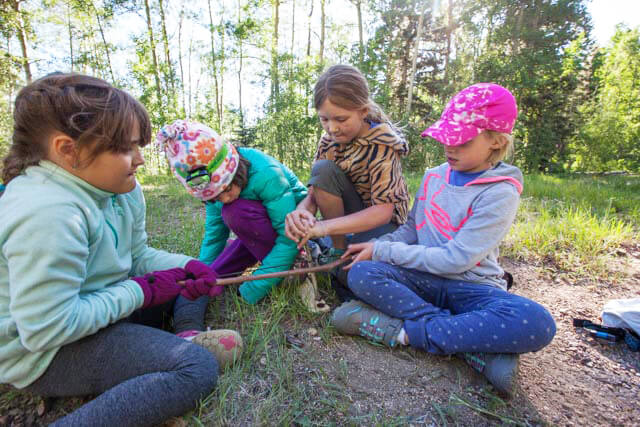
That afternoon the Eagles headed to Chupadero for our Cooking Adventure Campout. We roasted our dinner in the ground (Chicken, sweet potatoes, and corn), learned how to use a handdrill and bowdrill to start a fire, and pitched a large shade structure to provide respite from the hot sun.

We enjoyed time around the campfire roasting apples, apricots and telling stories. A quick rainstorm didn’t deter us from a fun evening under the stars.


Thursday morning started with an early trip to the Tesuque Pueblo, where the Hummingbirds and the Eagles joined together to pick peaches for the Pueblo people.

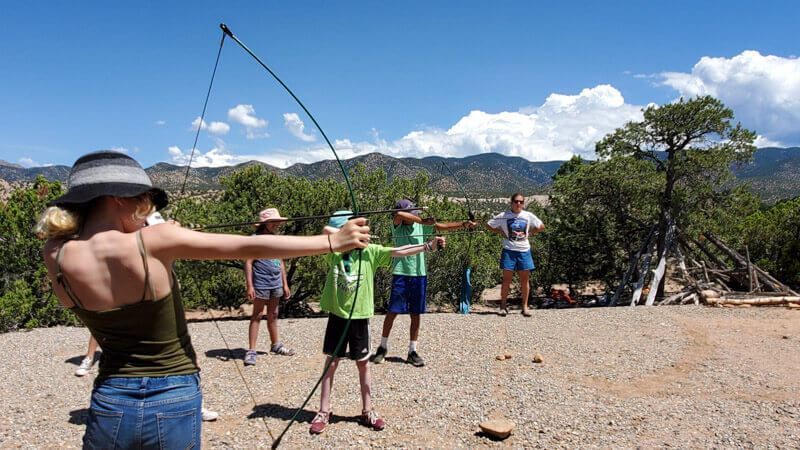
In return for the hard work gathering the fruit, we were able to pick our own peaches to enjoy and take home. Soon after we found our way to Chupadero where we spent the afternoon slicing peaches for a fruit compote and practicing archery.


Everyone got to take home fresh peaches that afternoon. YUM!!

With our bellies full of sweet fruit, it was nice to spend Friday playing in the woods and exploring our creative side. The Mountain Kids headed up and into the mountains where we spent the afternoon building shelters at Aspen Vista, creating hand made bows, arrows, and spears (from sticks, rocks, and yarn). It was a ‘sweet’ end to a super sweet and tasty week of foraging, eating, camping and archery! What an awesome end to an amazing summer 2019! Thank you families for being a part of it! 🙂


August 5: Mud, Clay, & Camouflage

It’s been another muddy good week with the Mountain Kids! It all began with an adventure to Deer Creek, where the Hummingbirds and the Eagles discovered several puddles of mud, camouflaged themselves from head to toe, and cooled down with an afternoon spent playing in the flowing water. While the Hummingbirds played in the stream much closer to the trailhead, the Eagles enjoyed a lengthier hike up to the ‘swimming pools’, where they practiced their [what felt to be] cold plunge and admired the beauty of the waterfall!

Tuesday, the two teams parted for different adventures. While the Eagles explored their way up the Santa Fe river, from Patrick Smith Park, the Hummingbirds took a sweet little adventure to Glorieta, where they gathered local clay, before heading back to the park due to incoming weather. While the adventures in Glorieta were short lived, the two teams enjoyed the opportunity to recombine at the park and spend an afternoon sculpting sweet pieces of art with our freshly harvested clay.

Wednesday morning started with a fun craft which showed the Mountain Kids how to create paintbrushes from yucca and painting pigments from different crushed up elements and stones. Before long, both teams were on their way to Abiquiu Lake, where the Mountain Kids found ample amounts of mud, dug through the dirt, sand, mud, and clay, and made a splash for several hours in the lake.

The Eagles and Hummingbirds headed up to the Big Tesuqe Trail for their Thursday adventures. While the two teams participated in separate hikes, both, the Eagles and Hummingbirds were able to practice their camouflage skills through games such as Eagle Eye” and “Pig”. Of course there was plenty of time, too, for the kids play in the water as they wished! Several of the Eagles competed in a dam building competition and used their wild imaginative creativity in order to build fairy houses along the river.

Friday found both teams exploring the Santa Fe River with an adventure up to the nearby tire swing. During our hike up the River, the Mountain Kids found several different berries and plants which we broke down into vibrant body paints. The afternoon was filled with much fun, playing at the Cerro Gordo Park, in the river, and on the tire swing! Our day was finished with a sweet little treat and a lovely lesson on bee keeping. One of our Hummingbird campers is a local bee keeper and brought a jar of his recently harvested honey to share with us, in addition to showing us his gear and talking us through the process of beekeeping. It wasn’t long after our lesson on bees that each Mountain Kid began running around and involving themselves in a massive water fight to end an exciting week!


Survival Hunting Tools: July 15-20

This was a week full of watery fun, skill building with knives and bows, and some good heart pumping hikes with views for miles and miles.

Monday we started with spear making at the Big Tesuque. Knife safety was the most important lesson of the day.  Campers made some pretty nice looking spears in preparation for our Atl Atls on Wednesday.  We played games to get to know one another and explored nature in all of it’s glory. (Caterpillars and all.)

Tuesday was a Rio en Medio adventure, a good wet hike to a waterfall where the campers enjoyed plunging into the icy water.  They quickly chose to wear rain jackets to protect them from the icy flow. It was a joyous day on the Rio en Medio trail.

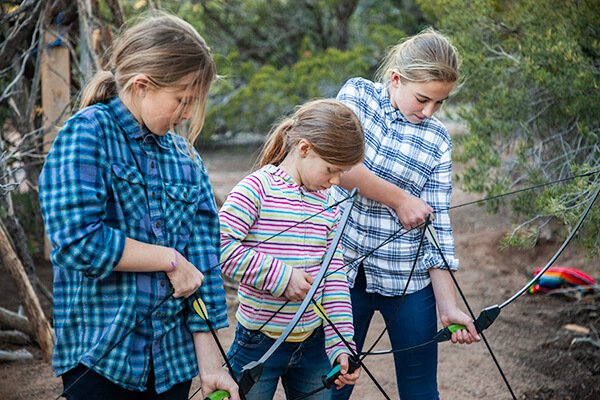
Wednesday was our day of Archery and more tool making in Chupadero.  We worked on our spears and Atl Atls (an ancient hunting tool which provides speed and leverage fro throwing a spear).  We then tried our hand at archery.  Bark Bunnies was a fun game for all –  aiming for chunks of bark, laden with jerky. If you hit the bark, and knock the jerky down, you get to eat the jerky.  Yum!

Thursday we headed up the Winsor Trail for Raven’s Ridge.  It was a challenging climb, so Michael helped break it up by teaching the kids how to make animal traps in the wild.  Super simple and cool.  The view from Raven’s Ridge was worth the climb! Nice work, all.  We had a great week of tool making, hiking and playing with you all!